
Every morning, Odin sent out two ravens. Every evening, he waited to see if they'd come back.
In Old Norse mythology, Odin kept two ravens: Huginn and Muninn — Thought and Memory. Each dawn, he sent them out over the world to see everything worth seeing, and each night they returned to his shoulders to tell him what they'd found. Odin ruled Asgard. But it was said he feared losing Huginn — losing Thought. What he feared more was losing Muninn. Losing Memory.
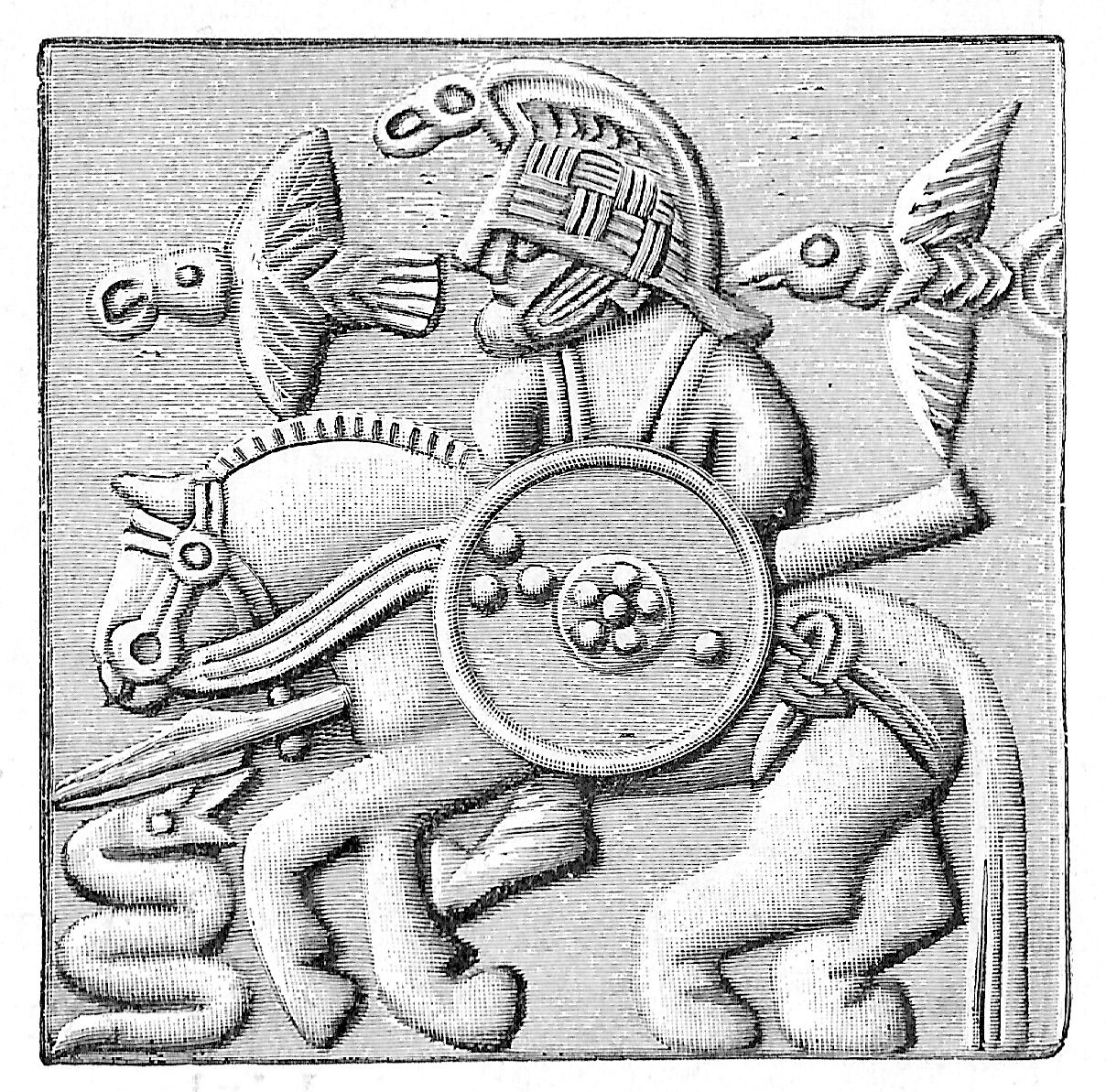
That fear is the whole reason this foundation has the name it does.

Ask almost any veteran what actually changed after service, and it isn't usually the body. It's Thought — the way the mind processes a threat, a crowd, a sudden noise, long after the reason for that processing is gone. And it's Memory — carrying something so heavy that the mind sometimes tries to protect itself by not letting the person look at it directly. Thought and Memory. The same two things Odin was afraid to lose. The same two things we watch veterans struggle to hold onto every day.
"You cannot heal a memory you're too afraid to look at, or a thought you don't have the words for. Art gives you both, at a distance safe enough to survive."
Why art is the raven that brings them home.
A raven can go where a person can't — into memory, into thought — and come back with something the person can actually hold. That's what a paintbrush does that a conversation sometimes can't. It lets a veteran send something out to look at the hardest part of what happened, and bring back a piece of it small enough, shaped enough, survivable enough to finally hold in two hands. Two ravens. Thought and Memory. Sent out, and — if we do this right — brought home.
Why "two," specifically.
Odin needed both birds to return, not just one. A person who can only think without ever touching memory stays numb. A person consumed by memory without the distance that thought provides stays trapped. Healing needs both ravens flying, and both ravens landing. That balance — not just the birds themselves — is what the name is actually about.
This is also just true of what we ask of our donors.
You're not funding an abstraction called "veteran wellness." You're funding the specific, ancient, human work of helping someone hold their own thought and their own memory again without either one destroying them. That's a smaller ask than "fix trauma." It's also, what we think, a truer one.